Bhavanee Automation Solutions
Capability

LPG bottling plant automation

Every signal in the plant, from bullet level to carousel count, in one control system with the safety interlocks built in.

How an LPG bottling plant runs, and what we automate in it

LPG bottling plant process schematicProduct is received by pipeline (through custody transfer metering) or tank truck, stored in two bullets and a sphere, pumped by P-101 A/B to the filling carousel, check-weighed and dispatched by truck. A GE iFIX SCADA with GE PLC in the control room supervises every stage, shares OISD-214 live data with the pipeline control and posts stock to SAP. A fire water ring main with deluge nozzles, LEL gas detectors and fire water pumps overlays the storage and filling shed.Fire water ring mainDelugeDelugeDVDVFW tankFWPJFire water pump (FWP) and jockey pumpLELLELLELControl roomGE iFIX SCADA + GE PLCOISD-214 live data to pipeline controlAuto dip posting to SAPStock to SAPPipeline receiptReceipt meteringFTPTTank truck gantry1ReceiptBullet 1LTPTTTBullet 2LTPTTTROVROVSphereLTPTTTROV2StorageP-101 A/BLPG compressorVapour return to truck (unloading)3Pumping4Filling shedEmpty cylinders inFilling carouselCheck-weighLeak testFilled cylinders out6DispatchCylinder dispatch5Fire and gasLPG productVapour returnFire waterControl signalRemote operated valveLELGas detector
  1. Receipt

    LPG arrives either through a cross-country pipeline, where it passes a custody-transfer metering skid, or by tank trucks unloaded at the gantry into the receipt header.

    We automate:Flow and pressure supervision on the receipt line, interlocks with the pipeline terminal, receipt metering totals and OISD-214 data exchange with pipeline control.

  2. Storage

    Product is held under pressure in horizontal bullets and a sphere, each isolated by remote operated valves on the outlet.

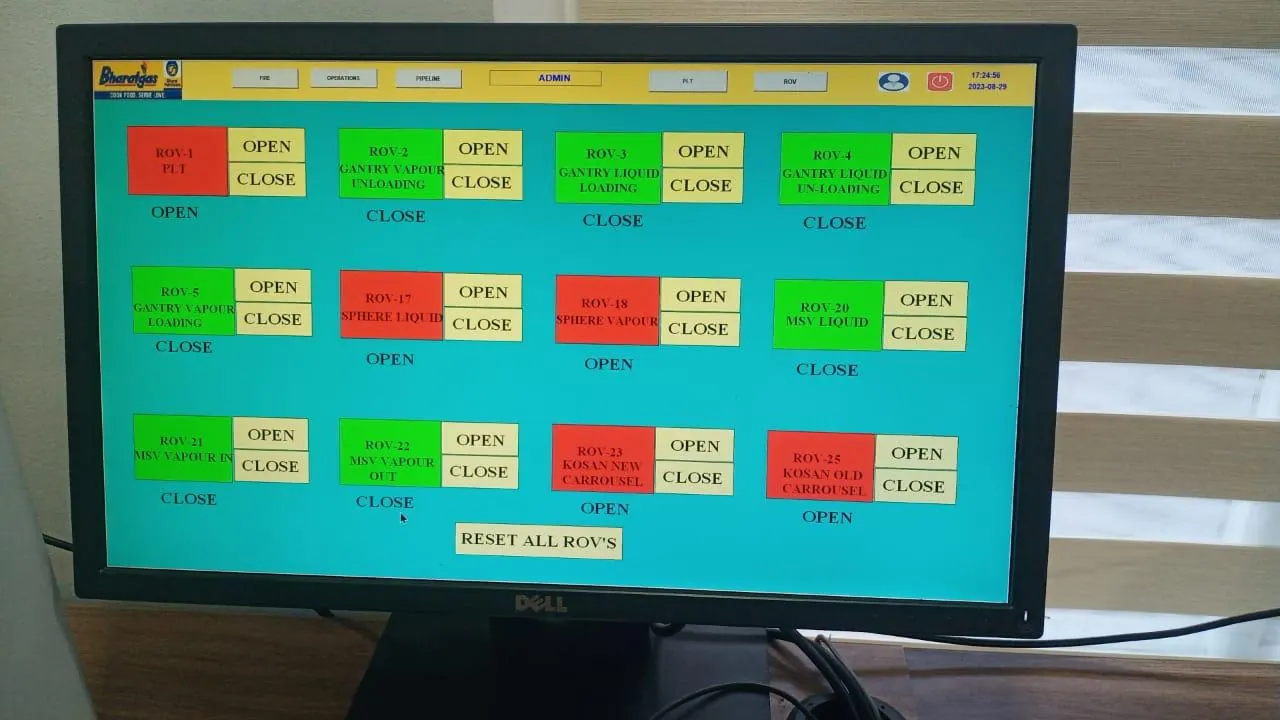
    We automate:LT, PT and TT on every vessel, high and low level and pressure alarms, ROV open and close commands with position feedback, and emergency isolation from the control room.

  3. Pumping and compression

    LPG pumps draw from the storage manifold and feed the filling shed; an LPG compressor returns vapour to the gantry so trucks can be unloaded.

    We automate:Start and stop sequences, duty and standby rotation, run hours, dry-run and low-suction protection, and ESD interlocks that trip pumps and close ROVs together.

  4. Filling shed

    Empty cylinders travel by conveyor onto the filling carousel, are filled by weight, then pass a check-weigh and leak test station before leaving the shed.

    We automate:Carousel status, cylinders per hour and shift production counts, check-weigh and leak-test results logged against each run, and shed gas detection tied to the ESD.

  5. Fire and gas

    A fire water ring main with deluge sprays over the vessels and shed, gas detectors around storage and filling, and fire water pumps kept pressurised by a jockey pump.

    We automate:LEL detection and zone alarms, deluge valve actuation, fire water pump sequencing on ring-main pressure drop, jockey pump pressure control, and zone annunciation at the gate.

  6. Dispatch and stock

    Filled cylinders are loaded onto trucks for dispatch, and the plant's opening and closing stock must be reported to the corporate ERP every day.

    We automate:Tank levels converted to quantity and posted to SAP automatically at 6 a.m. (auto dip posting), dispatch counts, and OISD-214 data sharing with the pipeline.

What a bottling plant needs from its control system

An LPG bottling plant receives product from a pipeline or tank trucks, stores it in bullets and spheres, pumps it to filling carousels and dispatches cylinders. The control system has to see all of it at once: storage levels, pressures and temperatures, pump and compressor status, valve positions, gas detection and the state of every interlock, so the operator can run the plant from the control room and the safety logic acts before a person has to.

Our scope

  • Tank farm: level, pressure and temperature on every bullet and sphere, high and low alarms, ROV control for isolation.
  • Pumping and compression: LPG pump and compressor start and stop with sequence interlocks, run hours and duty rotation.
  • Receipt and dispatch: tank truck gantry and pipeline receipt with flow, quantity and interlock supervision.
  • Filling shed: carousel status and production counts, empty and filled cylinder movement.
  • Safety: ESD logic, gas detector integration, interlocks between fire and gas and process systems.
  • Pipeline interface: OISD-STD-214 live data exchange with the connected cross-country pipeline.

Why operators choose us for this

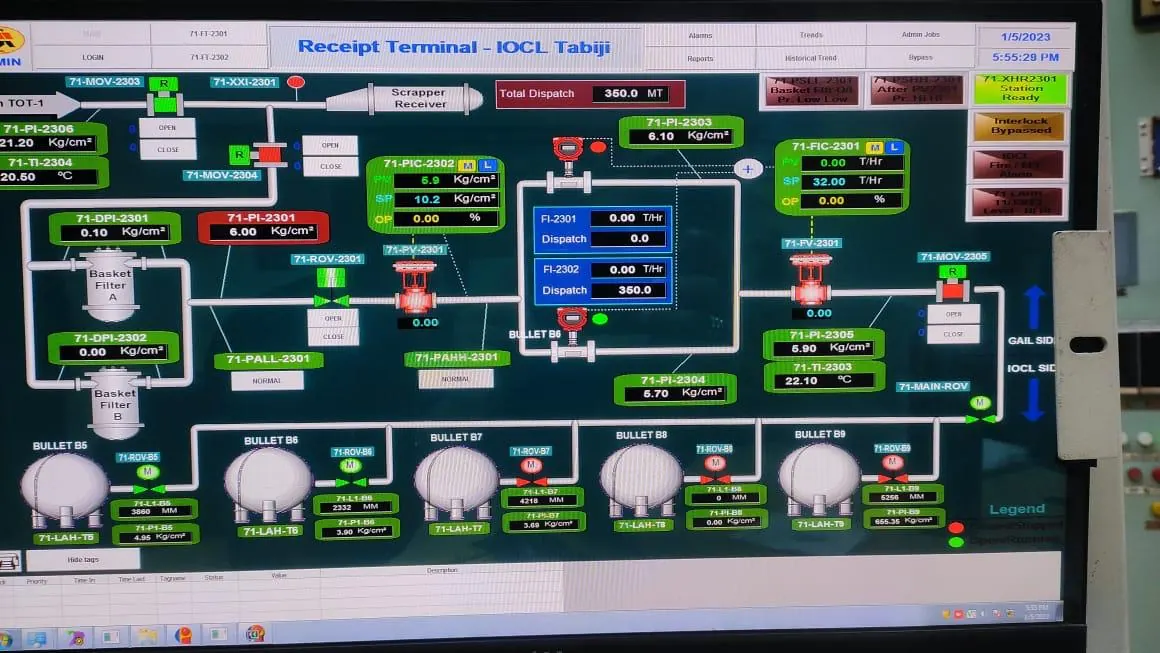
Our largest IOCL engagement was a turnkey automation of the Kalyani plant in West Bengal. We delivered the same scope at BPCL Mangalore with a full fire and gas system, and at IOCL Khorda. Across about 22 IOCL and BPCL plants our auto dip posting system sends measured stock to SAP every morning.

For project heads and buyers

One control room screen runs the whole plant. Operators see every tank, pump and valve, the safety logic trips before anyone has to react, and the stock figures reach SAP without a clipboard.

Why it matters

OISD audits, pipeline coordination and SAP stock accuracy all depend on the control system. Manual logging and standalone panels fail each of them.

What you receive
  • Control philosophy and cause and effect chart
  • PLC panels, FAT tested
  • iFIX application with tank farm, pumps, carousels, ESD and SAP posting
  • Commissioning, operator training, AMC
Helpful to have
  • Plant P&ID and layout
  • I/O list or instrument list
  • OISD-214 interface requirement, if connected
Typical duration

Four to six months for a complete plant; shorter for an upgrade of one system.

How a project runs

  1. Scope callWe go through your P&ID, I/O list or tender clause and agree what the control system has to do.
  2. Technical offerA control philosophy, architecture drawing, bill of materials and price. No surprises later.
  3. Engineering and buildDrawings for approval, PLC logic and SCADA screens built, panels assembled and FAT tested with you present.
  4. CommissioningInstallation supervision, loop checks, start-up and operator training on your site.
  5. SupportDocumentation handover and an annual maintenance contract with a named engineer.

What to send us for a quote

Attach these to your enquiry. The three marked essential are enough for us to start a budget.

  • Plant P&ID and layout drawingsEssential

    We count instruments and valves from it and draw the tank farm, pump and carousel logic on it.

  • Instrument list or I/O listEssential

    The I/O count sets controller size, panel count and most of the engineering hours.

  • Control system clause from the tender or OMC specificationEssential

    It fixes the PLC and SCADA make, redundancy and documents we must quote to.

  • Hazardous area classification drawing

    It decides barriers, Ex-rated field devices and where panels can stand.

  • Cause and effect chart or ESD philosophy, if issued

    We code the interlocks from it; without it we draft one for your approval.

  • Pipeline interface requirement (OISD-214), if connected

    It decides which tank and receipt data we exchange and over which link.

  • Existing PLC and SCADA make, version and licences

    It tells us whether we extend, migrate or replace.

  • Tank list with SAP material codes, if stock posting is in scope

    The auto dip posting needs one SAP code per tank before we can configure it.

Do not have all of it? Send what you have; we work from a site visit for the rest.

What drives cost and schedule

I/O count
Controller size, panel count and engineering hours all scale with it.
Redundancy
Each redundant pair roughly doubles controller hardware but not engineering.
Hazardous area equipment
Zone-rated field devices, barriers and certified enclosures cost more and add approval time.
Operating plant or new plant
An operating plant is cut over in shutdown windows, and those windows set the schedule more than engineering does.
External interfaces
The pipeline link and SAP posting each need testing with a third party, whose availability sets the date.
SCADA licences
Licences are sized to the tag count, so a larger plant costs more in software too.

Typical timeline

  1. Scope and control philosophy2 to 3 weeksScope call, site visit, control philosophy and I/O list agreed.
  2. Drawings and approval3 to 4 weeksArchitecture, panel and loop drawings submitted and approved.
  3. Panel build and software6 to 8 weeksPanels built while PLC logic and iFIX screens are written.
  4. FAT1 to 2 weeksFull system test at our works with you present.
  5. Site installation and commissioning4 to 6 weeksInstallation supervision, loop checks, interlock tests, start-up.
  6. Training and handover1 to 2 weeksOperator training, as-built documents, AMC begins.

Overall: Four to six months for a complete plant; shorter for an upgrade of one system.

Budget

Every plant is different, so we price from the I/O list and scope rather than a rate card. Send the documents above and you will have a budget figure within a week, and a fixed price after the scope call.

Projects

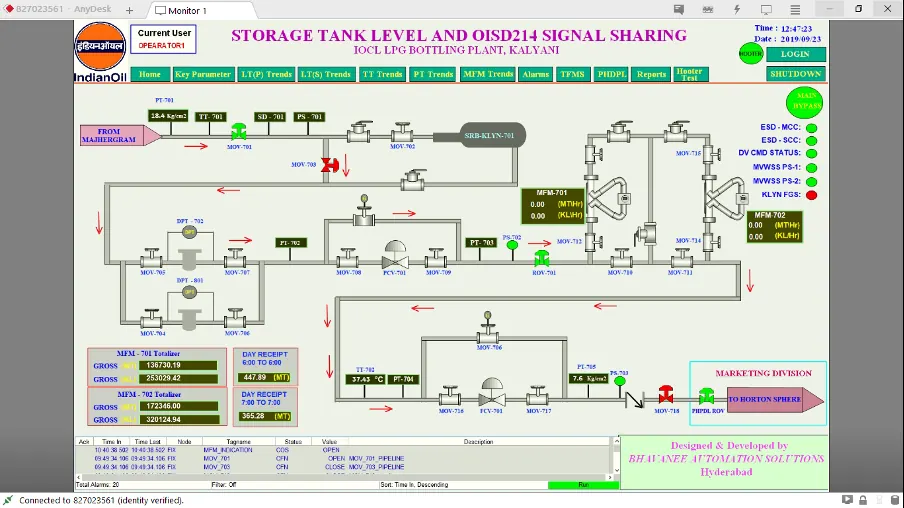
Storage tank level and OISD-214 signal sharing screen, IOCL Kalyani

Indian Oil (IOCL), Kalyani, West Bengal

Turnkey LPG bottling plant automation

Our largest IOCL engagement: complete automation of the LPG bottling plant with every real-time signal and safety interlock in one control system.

Level, temperature, pressure, valve status and alarms integrated in GE iFIX; full plant operation from the control room; live terminal data pushed to the connected pipeline as OISD-STD-214 requires.

  • GE iFIX
  • OISD-214
  • Turnkey

Read the case study

Digital fire clock, BPCL Mangalore

BPCL, Mangalore

Plant automation, fire and gas, digital fire clock

Complete LPG plant automation plus the full fire and gas system, executed in about five months.

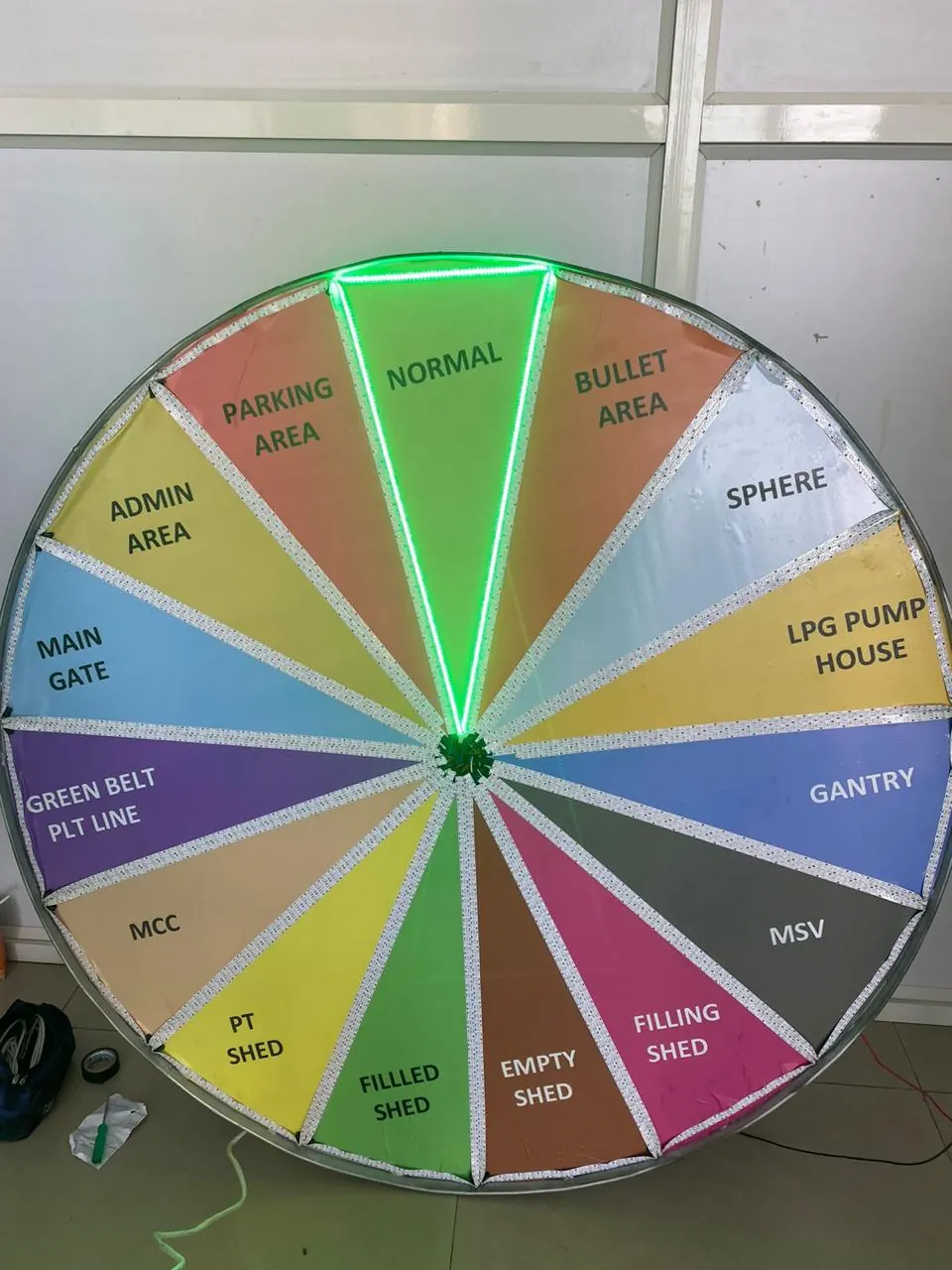
Deluge valves, break glass units, sequenced fire engines, jockey pump and ROV control. A digital fire clock at the gate lights the zone where fire is detected, mapped across admin, MCC, sheds, pump house, gantry, sphere and bullet areas.

  • Fire and gas
  • ROV control
  • Zone annunciation

Read the case study

IOCL and BPCL, About 22 plants across India

Auto dip posting of LPG stock into SAP

Measured tank levels posted into SAP automatically, removing manual stock entry.

SCADA collects live levels; every morning at 6 am a Java routine posts them to SAP through a remote function call. Running at about 16 IOCL plants since 2017 and 6 BPCL plants.

  • OT to IT
  • SAP
  • 22 plants

Read the case study

Common questions

What is OISD-214 signal sharing?

OISD-STD-214 covers cross-country LPG pipelines. Bottling plants connected to a pipeline share live data such as tank levels and receipt status with the pipeline control system so both ends operate in coordination. We implemented this at IOCL Kalyani and GAIL Vizag.

Which SCADA do you use for LPG plants?

GE iFIX, with GE PLCs. iFIX gives the alarm management, trending and audit trail that oil marketing companies specify, and we have standardised on it since 2005.

Related capabilities

Planning a plant, terminal, WTP or substation?

Tell us what you are planning, even if the details are still rough. We reply with a technical approach and an offer.

Discuss a project