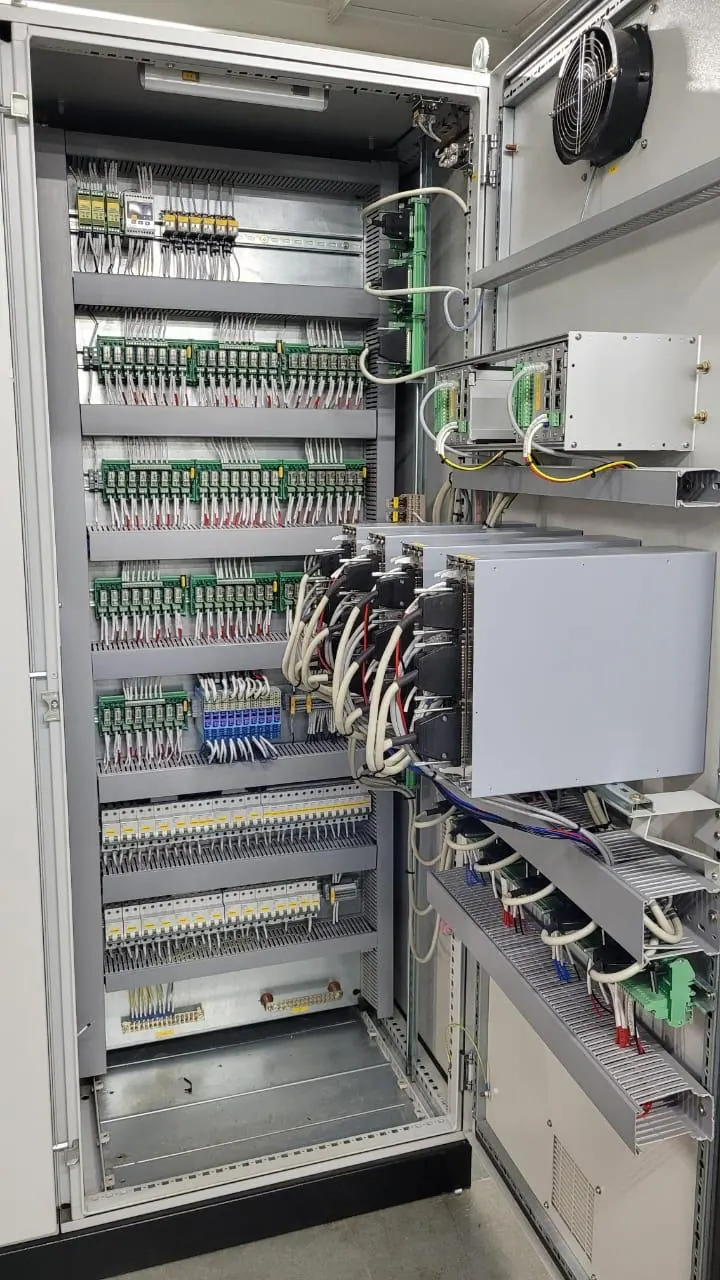
The panel is where the design becomes hardware. Ours are built to our drawings and tested before they leave the shop.
What is inside a Bhavanee panel, and how it gets to site
Read the cabinet from the top: power comes in, two supplies feed the PLC, and field cables land on terminals at the bottom. The steps on the right are how it gets from a signal list to a tested panel.
What a tested panel saves you
Commissioning is checking, not buildingThe panel arrives wired, powered up and tested. Site work is landing field cables and confirming each loop.
Every cable has a landing on the drawingEach field cable ends on a numbered terminal shown on the wiring drawing. Faults are traced, not guessed.
The inspector signs off a test recordPoint-to-point and FAT results are written down and signed. The inspector reviews the record.
Spares and expansion are already in the cabinetWe leave about 20 percent spare I/O and terminals. Adding a signal later does not need a new panel.
What we deliver
A control panel is the physical home of the control system: the PLC, its I/O modules, power supplies, relays and terminals, arranged so that every field cable has a documented place to land. We engineer and build panels for our own projects and for clients who need a panel to their specification.
PLC and RTU panels with redundant power supplies, surge protection and spare capacity.
Marshalling cabinets, relay panels and operator consoles.
Cable schedules, loop drawings, GA and wiring drawings, I/O lists and test records.
Factory acceptance testing against the I/O list and cause and effect charts, with the client present.
Installation supervision, loop checks and commissioning on site.
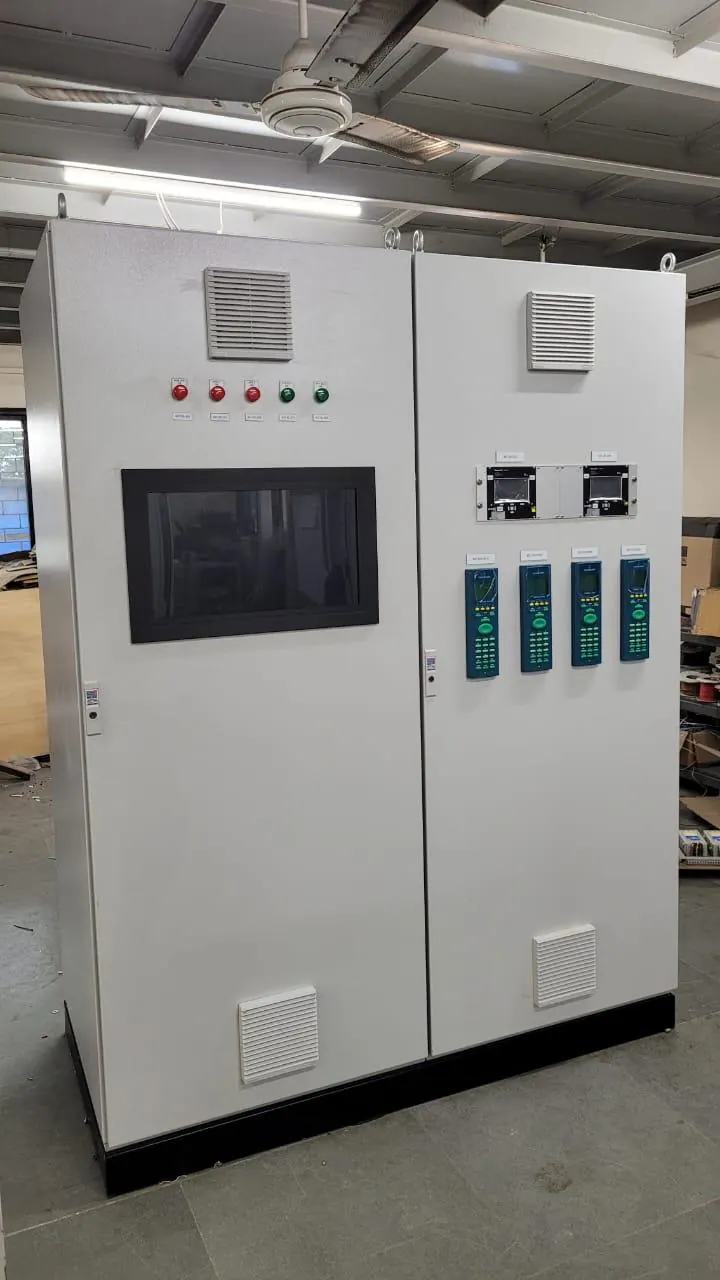
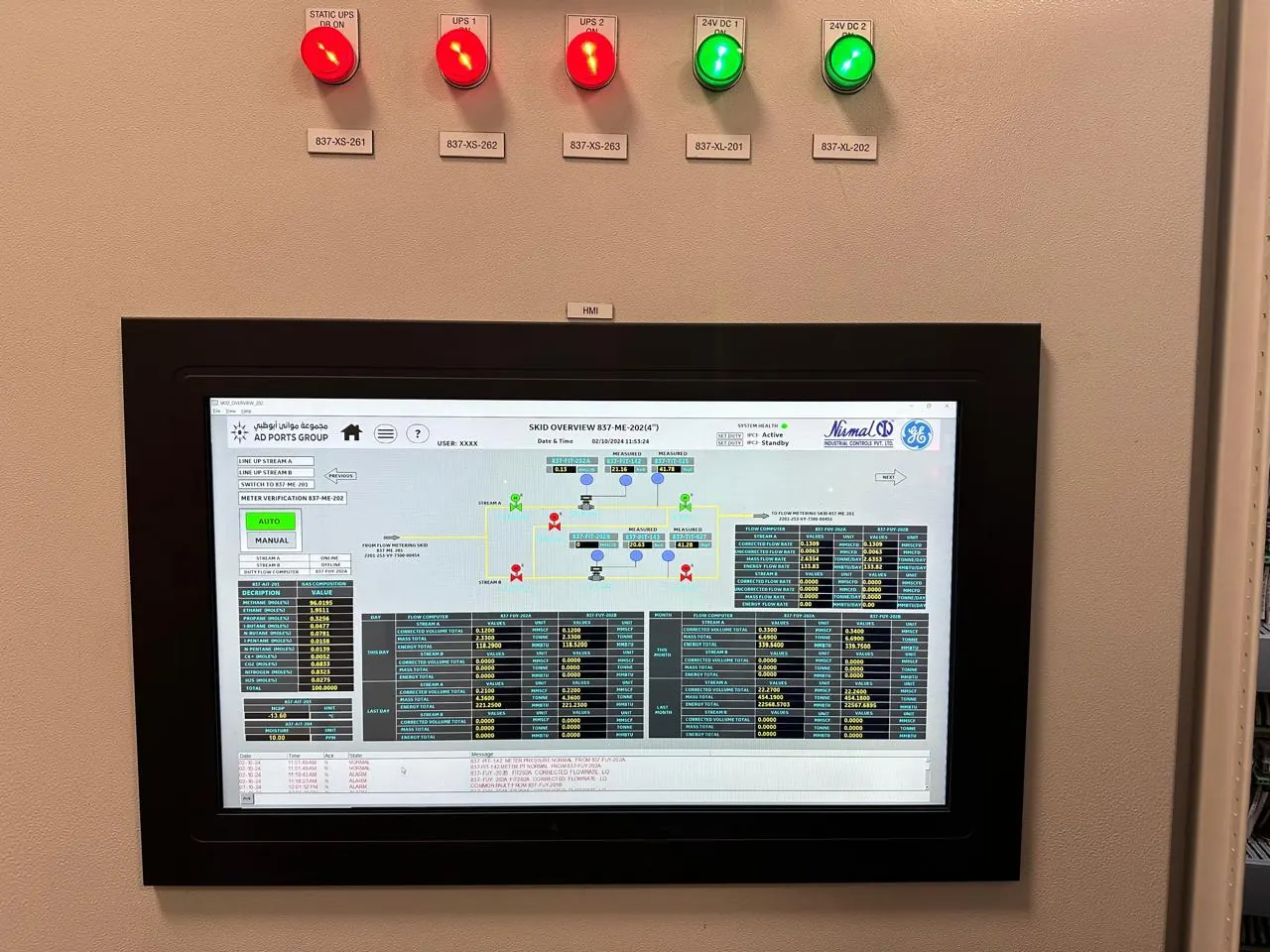
Panels for the Abu Dhabi metering skid were built in Mumbai to our specification and shipped with the GE PLC racks and Emerson S600+ flow computers already mounted and tested.
GE PLC panelPanel with S600+ flow computersSkid HMI panel
For project heads and buyers
The cabinet that arrives on site has already been wired, powered up and tested against the drawings, so commissioning is checking, not building.
Why it matters
Panels built without drawings or FAT are where commissioning delays come from. A tested panel with documentation is also what the client's inspector signs off.
What you receive
GA, wiring and loop drawings
Built and FAT tested panel with test records
Cable schedules and as-built documentation
Installation supervision
Helpful to have
I/O list and control philosophy
Site conditions and hazardous area class
Client panel specification, if any
Typical duration
Six to ten weeks from approved drawings.
How a project runs
Scope callWe go through your P&ID, I/O list or tender clause and agree what the control system has to do.
Technical offerA control philosophy, architecture drawing, bill of materials and price. No surprises later.
Engineering and buildDrawings for approval, PLC logic and SCADA screens built, panels assembled and FAT tested with you present.
CommissioningInstallation supervision, loop checks, start-up and operator training on your site.
SupportDocumentation handover and an annual maintenance contract with a named engineer.
What to send us for a quote
Attach these to your enquiry. The three marked essential are enough for us to start a budget.
I/O list with signal types and rangesEssential
It sets module count, enclosure size and the whole bill of materials.
Control philosophy or functional descriptionEssential
Without it the drawings and the logic are our assumptions, not your requirement.
Site conditions: indoor or outdoor, ambient temperature, hazardous area classEssential
They decide enclosure rating, cooling and whether barriers or certified enclosures are needed.
Power supply details: voltage, phases, fault level and earthing system
Breaker ratings and the earthing layout follow from them.
Client panel specification and approved vendor list
Components must come from your approved makes, or the panel is rejected at inspection.
Cable entry and available floor space
Top or bottom entry and panel footprint fix gland plates and the enclosure layout.
Communication needs: protocols, remote I/O and HMI size
They decide ports, switches and screen cut-outs in the doors.
Inspection and FAT requirements, including any third-party agency
We schedule the build and test around the witnesses and the test procedure you want.
Do not have all of it? Send what you have; we work from a site visit for the rest.
What drives cost and schedule
Number and size of panels
Enclosures, busbar and wiring hours scale with them.
Approved vendor list
A narrow list can mean longer lead times or premium components.
Enclosure type and hazardous area
Certified, purged or stainless enclosures cost more and take longer to source.
Communication and remote I/O
Networks, switches and remote racks add parts and test time.
Inspection and FAT witnessing
Third-party agencies fix our test dates and can add a re-test round.
Component lead time
Imported drives and PLC modules often take longer to arrive than the panel takes to build.
Typical timeline
Procurement2 to 3 weeksStarts once drawings are approved. Components ordered and received.
Build and wiring2 to 3 weeksEnclosure, power and control wiring built to the drawings.
Testing and FAT1 to 2 weeksPowered tests and a witnessed FAT with test records.
Dispatch and installation supervision1 to 2 weeksDelivery, positioning and supervision of site connection.
Overall: Six to ten weeks from approved drawings.
Budget
Every plant is different, so we price from the I/O list and scope rather than a rate card. Send the documents above and you will have a budget figure within a week, and a fixed price after the scope call.
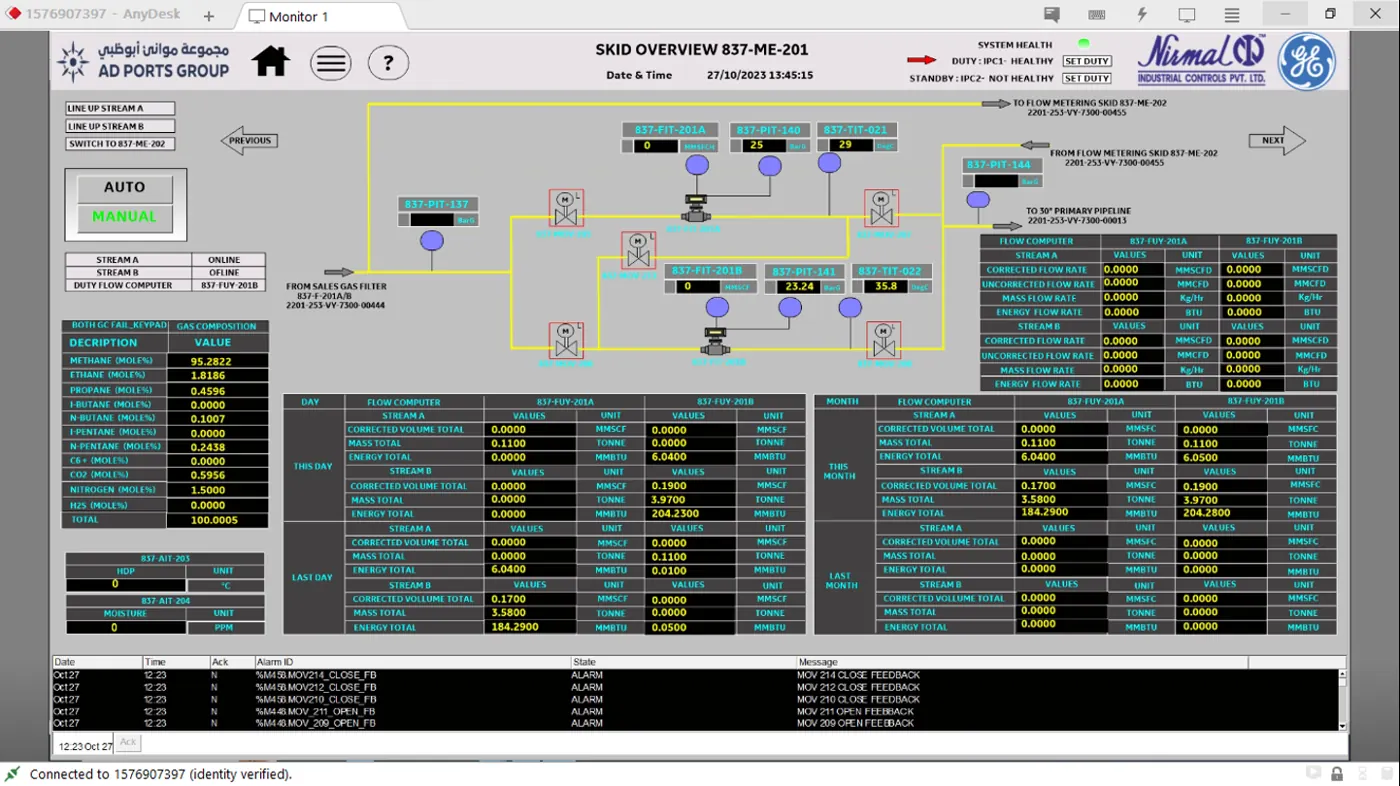
PLC, SCADA and flow computer integration for a fiscal gas metering skid, executed with Nirmal Industrial Controls.
Emerson FloBoss S600+ flow computers calculate flow to AGA, ISO, GPA and GERG; the GE PLC handles skid logic and valves; Cimplicity shows meter runs and totals. Panels built in Mumbai to our specification.