In an LPG plant the fire protection system is the one that has to work first time. We engineer the logic that makes it do so.
How an LPG plant fire and gas system works, and what we automate in it
1
Detection
Each zone has break glass units, manual call points and a loop of quartzoid bulbs that burst in the heat of a fire. Gas detectors watch for LPG at low level.
We automate:Detection loop supervision with open and short-circuit monitoring, BGU and MCP inputs, LEL alarm levels, and voting where the design uses it.
2
Fire and gas PLC
A dedicated PLC reads every detector and decides what happens in each zone from a cause and effect matrix agreed with the plant.
We automate:Cause and effect logic per zone with fail-safe outputs. On LEL high it closes the ROVs and trips the LPG pumps through the ESD.
3
Deluge
The zone's deluge valve opens and medium velocity nozzles cover the sphere in water to keep it cool, as OISD-STD-144 requires.
We automate:Deluge valve actuation from detection or from the control room, open and closed feedback, and an alarm if the valve does not move.
4
Fire water pump house
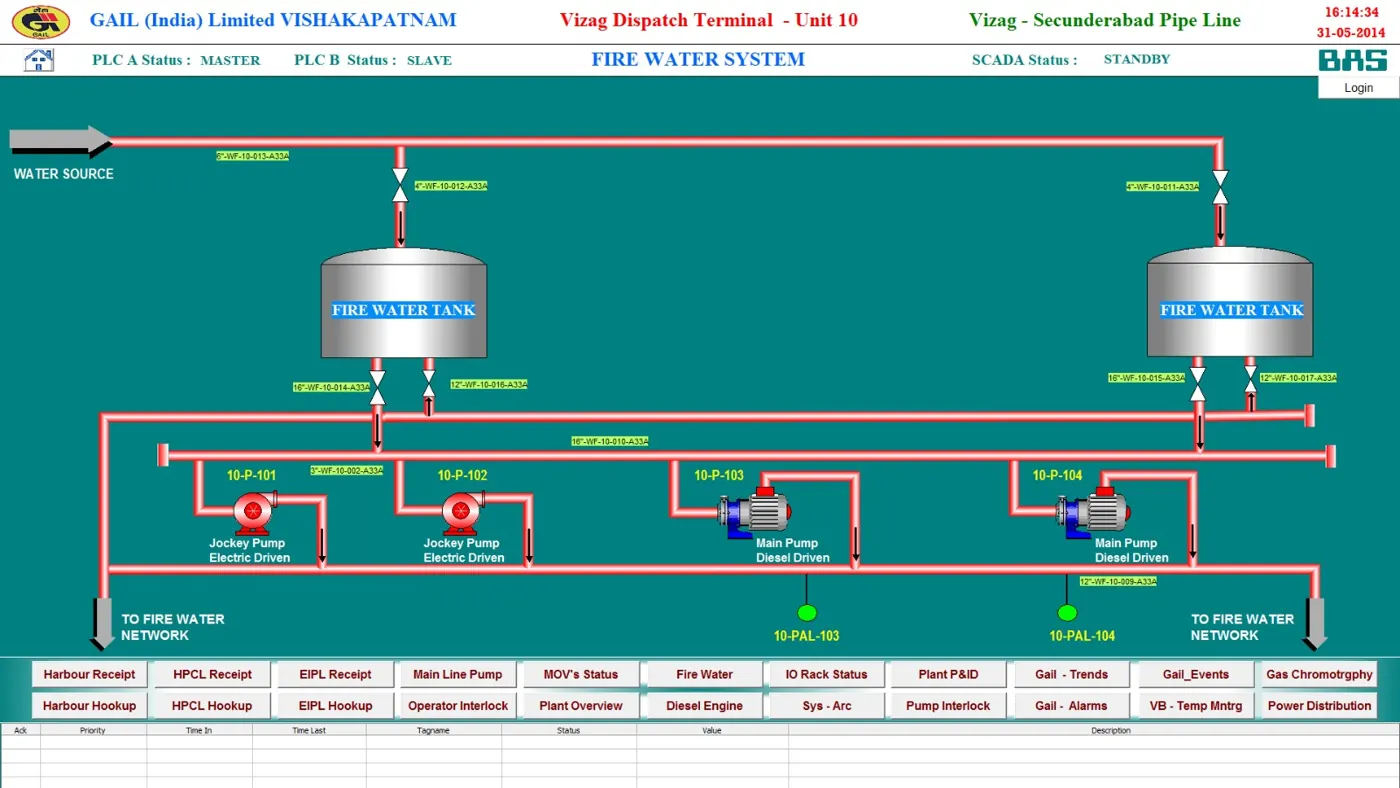
A jockey pump keeps the ring main near 7 bar. When a deluge valve opens the pressure falls and the main fire pumps start one after another.
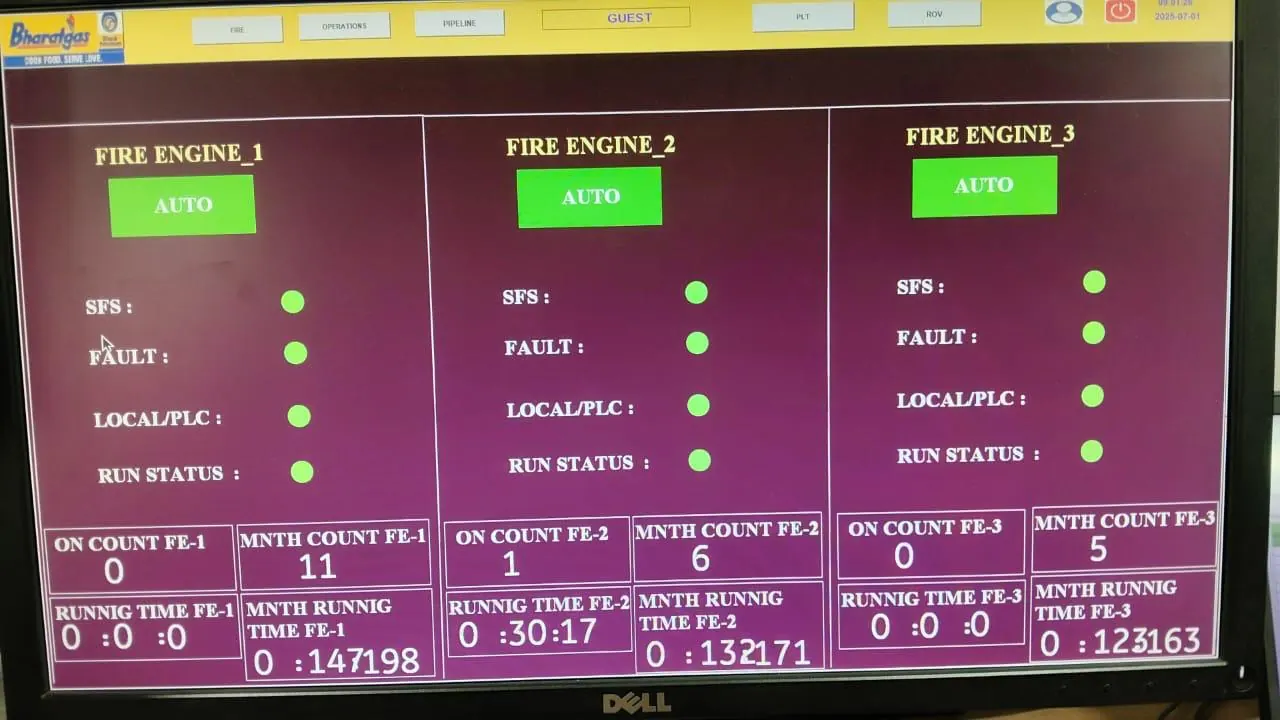
We automate:Jockey pump pressure control, fire pump auto-start sequence on pressure, diesel engine status, run hours and monthly test counters.
5
Ring main
A pressurised loop of fire water pipe runs around every zone and feeds the deluge valves and hydrants, so water is there the moment a valve opens.
We automate:Ring main pressure on SCADA with low-pressure alarms and trends, so a leak or a jockey pump that runs too often shows up early.
6
Annunciation
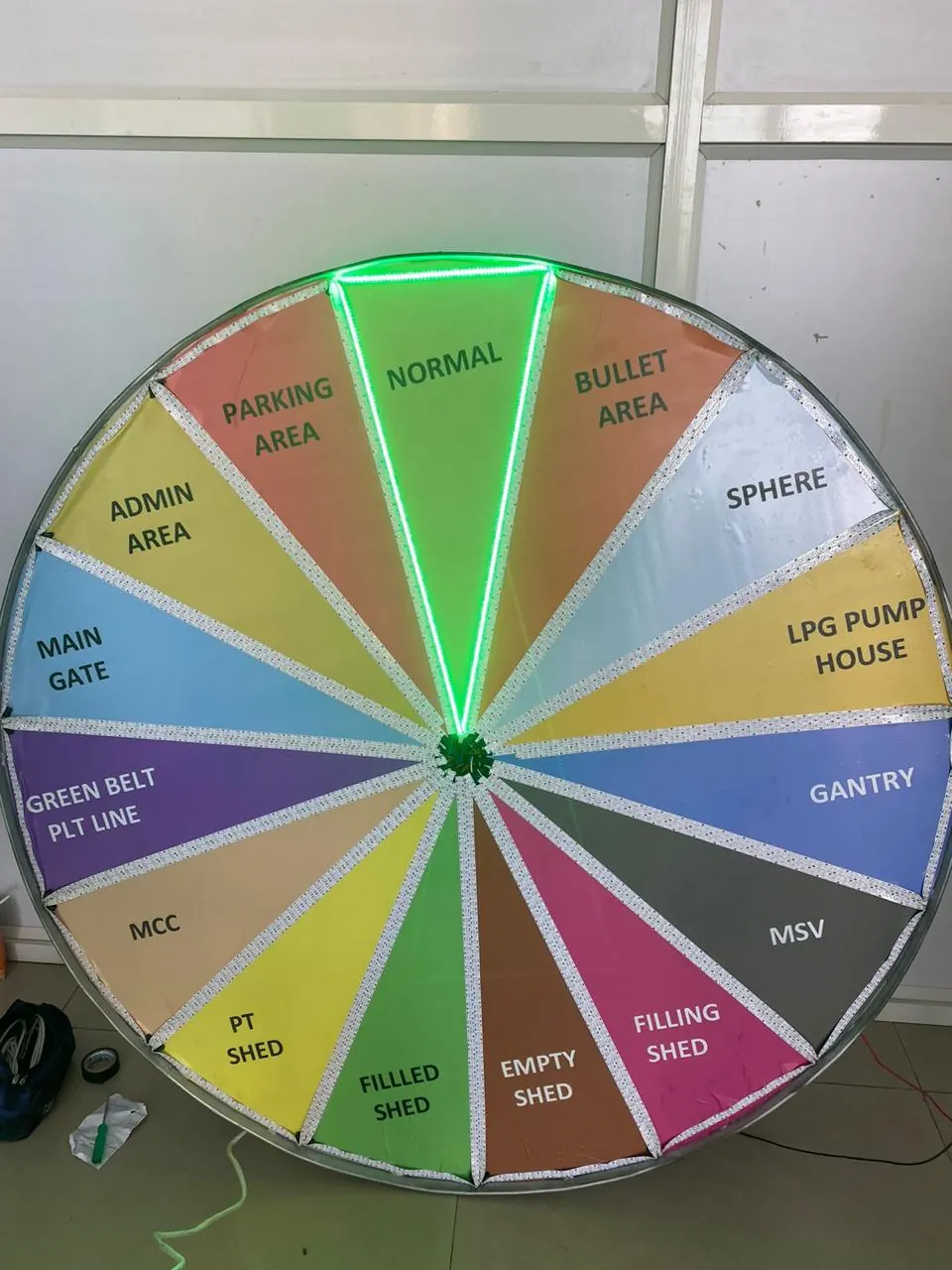
The zone on fire lights up on the digital fire clock at the plant gate, the hooter sounds and the alarm appears on SCADA in the control room.
We automate:Zone annunciation on the digital fire clock, SCADA fire screens, SMS alerts, and a time-stamped event log for the OISD auditor.
What happens when a detector trips
1Bulb burstsA bulb bursts on the loop in zone 4. The F&G PLC sees the loop open and raises the zone alarm.
2Deluge opensThe cause and effect logic opens DV-4 and water sprays the sphere. The gate fire clock lights zone 4 and the hooter sounds.
3Pumps startRing main pressure falls past the jockey setpoint. The jockey cannot hold it, so FWP-1 starts, then FWP-2 if pressure keeps falling.
4Gas isolatedLEL high in the same area closes the ROVs and trips the LPG pumps through the ESD.
5Logged and resetEvery event is time-stamped on SCADA. After the fire the operator resets the zone, and the pump run hours and test records go into the OISD log.
How an LPG plant fire water system works
Each area of the plant has detection: break glass units, manual call points and fused bulb (quartzoid) detector loops. When fire is detected, that area's deluge valve opens and water sprays from a pressurised ring main. The pressure drop that follows starts the fire water pumps in a set sequence. A small jockey pump holds the ring main above about 7 bar at all times, compensating for leakage, so water is available the instant a deluge valve opens. This is the medium-velocity water spray and deluge arrangement OISD-STD-144 requires for LPG installations.
What we deliver
PLC logic for detection, deluge valve actuation and fire pump sequencing with fail-safe behaviour.
Jockey pump pressure control and fire pump run hour and monthly counters.
Gas detector integration with LEL alarms and ESD actions.
ROV control screens for emergency isolation.
Zone annunciation, including the digital fire clock we built at BPCL Mangalore that lights the affected zone at the plant entrance.
Fire water pump sequencing, HPCL VisakhapatnamDigital fire clock, BPCL MangaloreFire water system, GAIL Vizag
For project heads and buyers
When a detector sees fire, the right valve opens, the pumps start in the right order and the pressure stays up until the fire is out. Nobody has to be at the pump house.
Why it matters
OISD-144 compliance is inspected. A fire water system that fails to sequence pumps or hold pressure is the finding that stops a plant.
What you receive
Fire and gas PLC logic with cause and effect matrix
Deluge, pump and jockey control
SCADA fire screens and zone annunciation
Function test records for the auditor
Helpful to have
Plant zone map and fire water layout
Detector, deluge valve and pump schedule
Existing fire panel make, if any
Typical duration
Two to four months, usually inside a plant automation job.
How a project runs
Scope callWe go through your P&ID, I/O list or tender clause and agree what the control system has to do.
Technical offerA control philosophy, architecture drawing, bill of materials and price. No surprises later.
Engineering and buildDrawings for approval, PLC logic and SCADA screens built, panels assembled and FAT tested with you present.
CommissioningInstallation supervision, loop checks, start-up and operator training on your site.
SupportDocumentation handover and an annual maintenance contract with a named engineer.
What to send us for a quote
Attach these to your enquiry. The three marked essential are enough for us to start a budget.
Plant zone map and fire water network layoutEssential
Each zone gets its own detection loop and deluge valve logic, so we start from the map.
Detector, deluge valve and pump scheduleEssential
It lists every input and output the logic has to handle.
OISD-144 compliance report or latest audit findingsEssential
We design to close the findings instead of repeating them.
Fire pump details: drive type, rating and starting arrangement
Pump sequence and start on low pressure depend on whether each pump is motor or diesel driven.
Jockey pump and ring main pressure set points
These set the pressure hold and the trip level that starts the main pumps.
Existing fire panel and gas detector makes and output types
We need to know whether signals arrive as 4 to 20 mA, relay contacts or serial data.
Hazardous area classification
It decides barriers and the certification of field devices.
Dates when pumps and deluge valves can be test run
Function tests need water on the ring main and the plant's permission to discharge.
Do not have all of it? Send what you have; we work from a site visit for the rest.
What drives cost and schedule
Number of zones, deluge valves and pumps
Each adds I/O, logic and a function test.
Safety-rated controller
If one is specified, hardware and documentation cost more.
Hazardous area certification
It sets the type of field devices and barriers.
Retrofit into live plant
Old field wiring has to be traced, tested and sometimes re-terminated before the new logic goes in.
Function test conditions
Discharging deluge valves needs water, drainage and plant permission, which fixes the test dates.
Typical timeline
Scope and cause and effect1 to 2 weeksZones, detectors, pumps and the cause and effect matrix agreed.
Drawings and approval2 to 3 weeksPanel and logic drawings approved.
Panel build and software3 to 5 weeksFire PLC panel built and logic tested.
FAT1 to 2 weeksSimulated detection and pump sequence tests with you present.
Site installation and function tests2 to 4 weeksField wiring checks and live function tests of each zone.
Handover1 weekTest records for the auditor and operator training.
Overall: Two to four months, usually inside a plant automation job.
Budget
Every plant is different, so we price from the I/O list and scope rather than a rate card. Send the documents above and you will have a budget figure within a week, and a fixed price after the scope call.
Upgrade of the fire and gas automation at the HPCL LPG bottling plant.
Detection loops trigger the area deluge valve; ring main pressure drop starts fire engines in sequence; a jockey pump keeps the main above about 7 bar, to OISD-STD-144.
Plant automation, fire and gas, digital fire clock
Complete LPG plant automation plus the full fire and gas system, executed in about five months.
Deluge valves, break glass units, sequenced fire engines, jockey pump and ROV control. A digital fire clock at the gate lights the zone where fire is detected, mapped across admin, MCC, sheds, pump house, gantry, sphere and bullet areas.
Traditional LPG plants use a mechanical rotating arrow at the gate to show which zone is on fire. Our digital version is a lit zone map driven by the fire and gas PLC, so anyone entering the plant sees the affected area immediately.
Do you integrate with existing fire panels?
Yes. We integrate addressable fire panels, gas detectors and existing deluge valves into the PLC and SCADA on brownfield sites.