Where product changes hands, the measurement is the invoice. We build the metering automation that both parties trust.
Measurement that settles money
Custody transfer is the point where ownership of oil or gas changes. The quantity measured there is invoiced, so the measurement has to be accurate to international standards, continuous, and backed by an audit trail that survives a dispute. This is a different discipline from plant control, and it is one of our specialities.
What we deliver
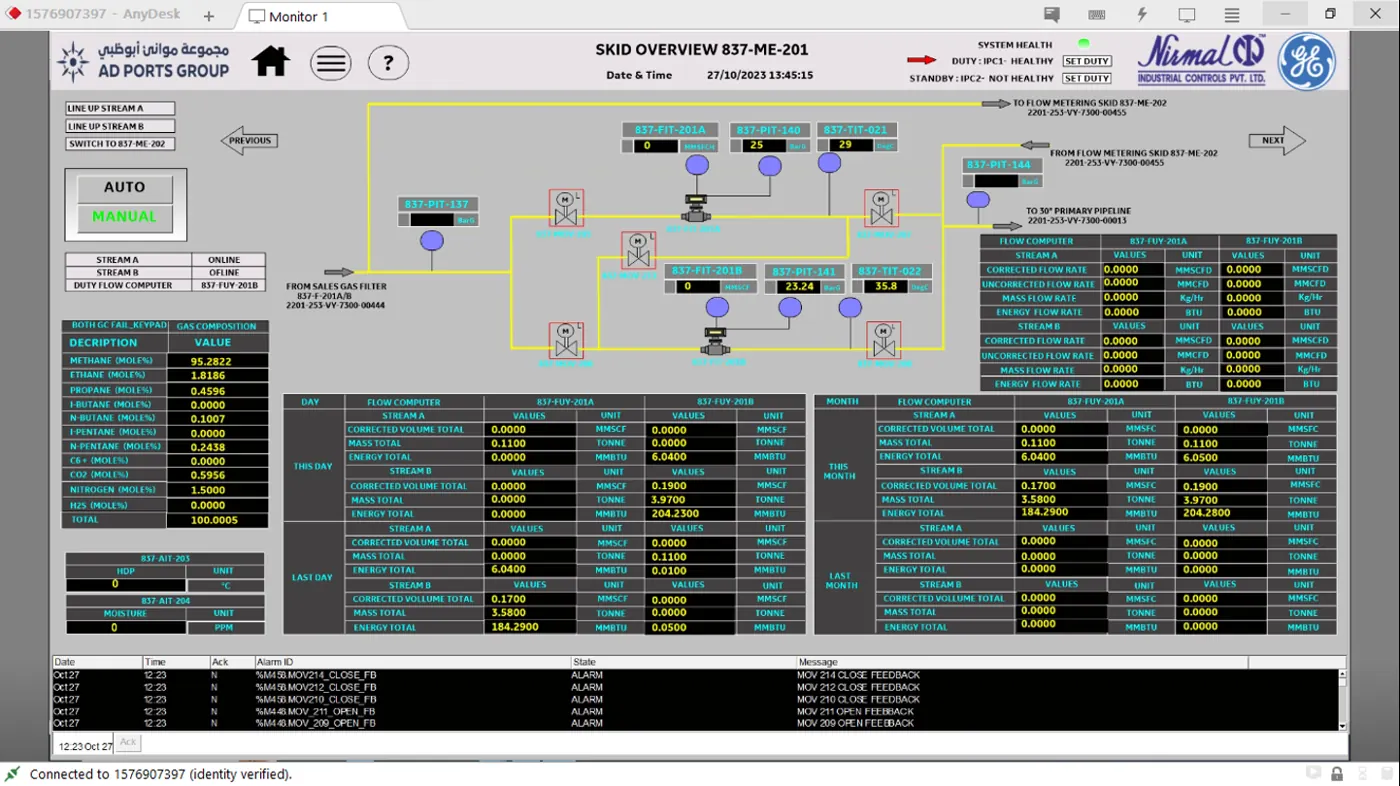
Metering skid automation: PLC for skid logic and valve control, SCADA for meter runs, totals and alarms.
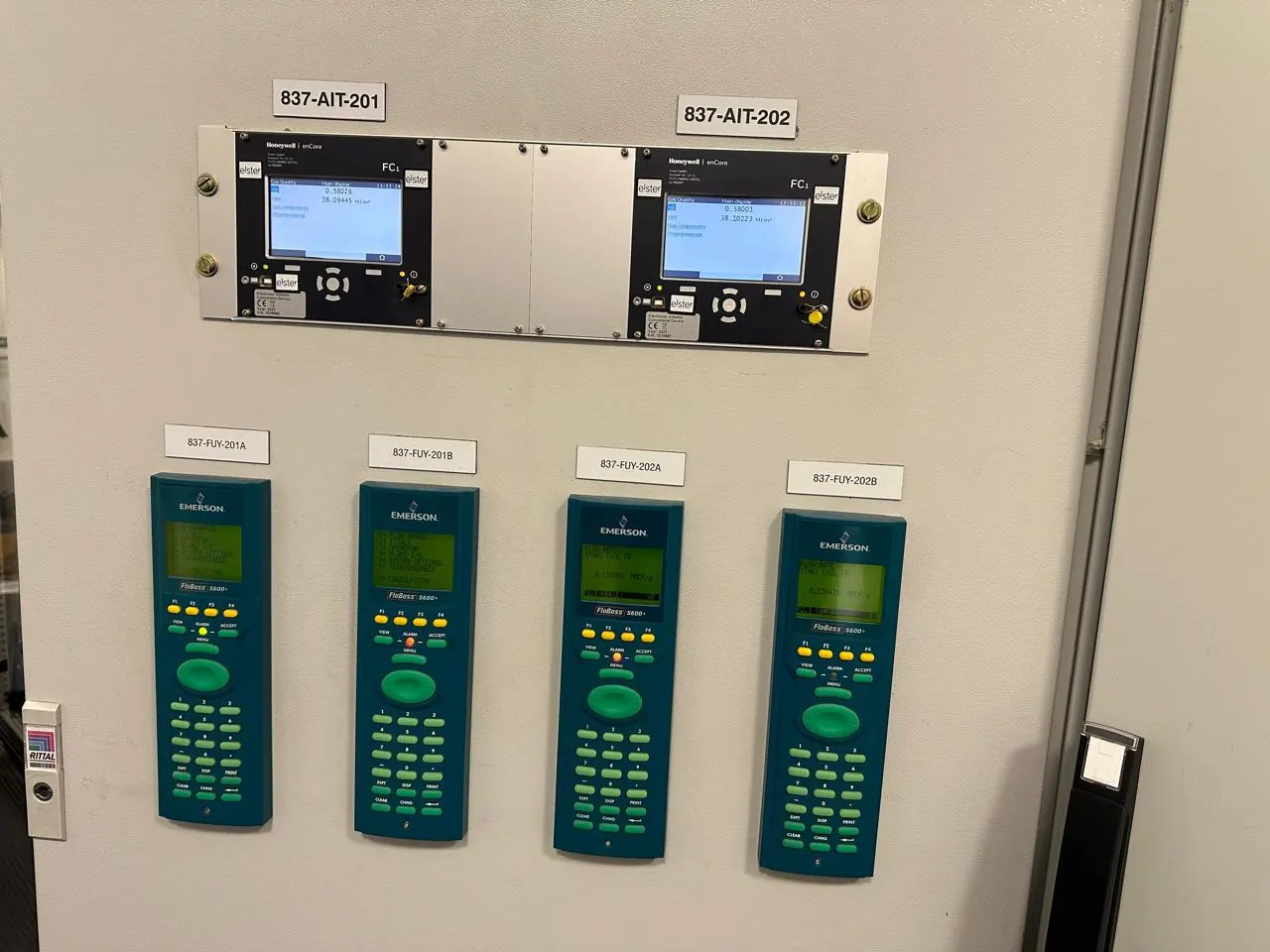
Flow computers: integration of Emerson FloBoss S600+ fiscal flow computers, which calculate flow to AGA, ISO, GPA and GERG standards with tamper-resistant totals.
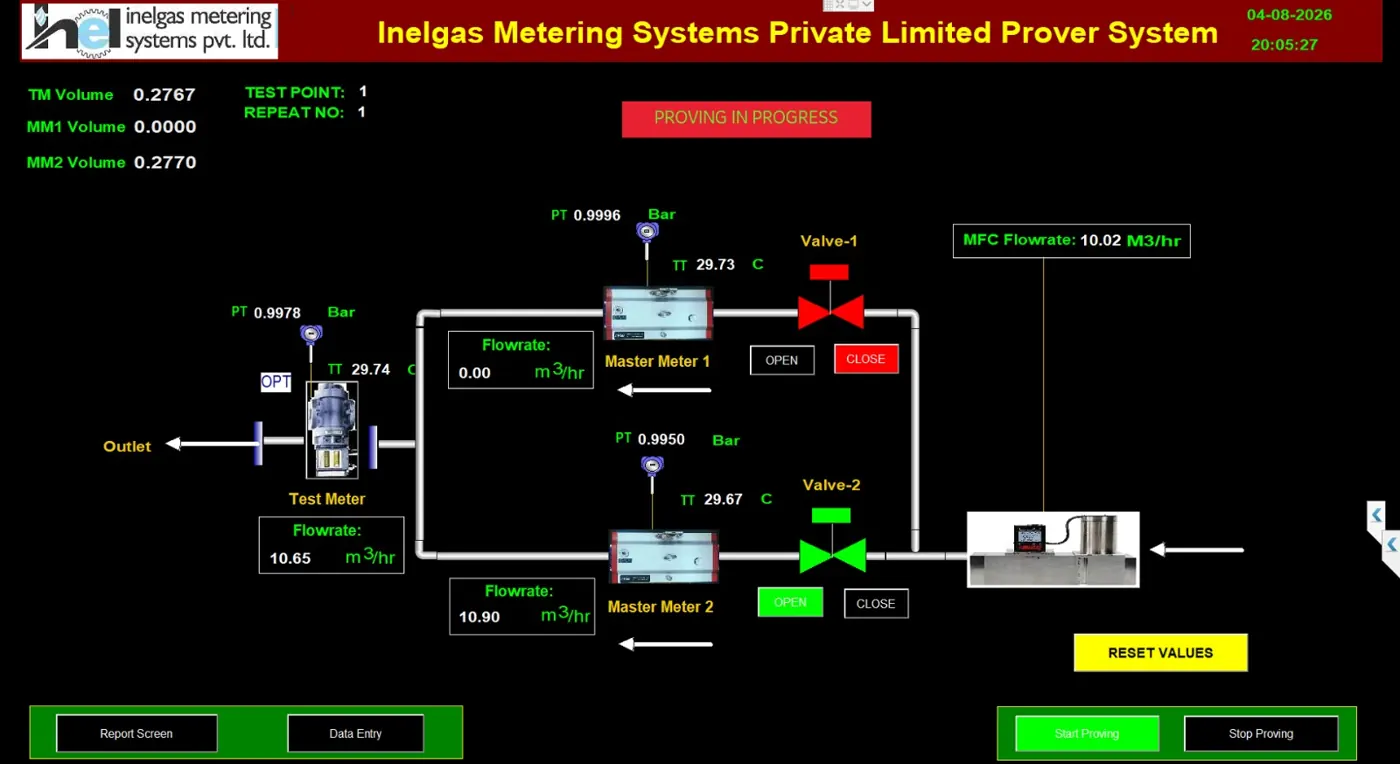
Meter proving: automated prover systems that verify a meter's reading against a reference volume and compute the meter factor.
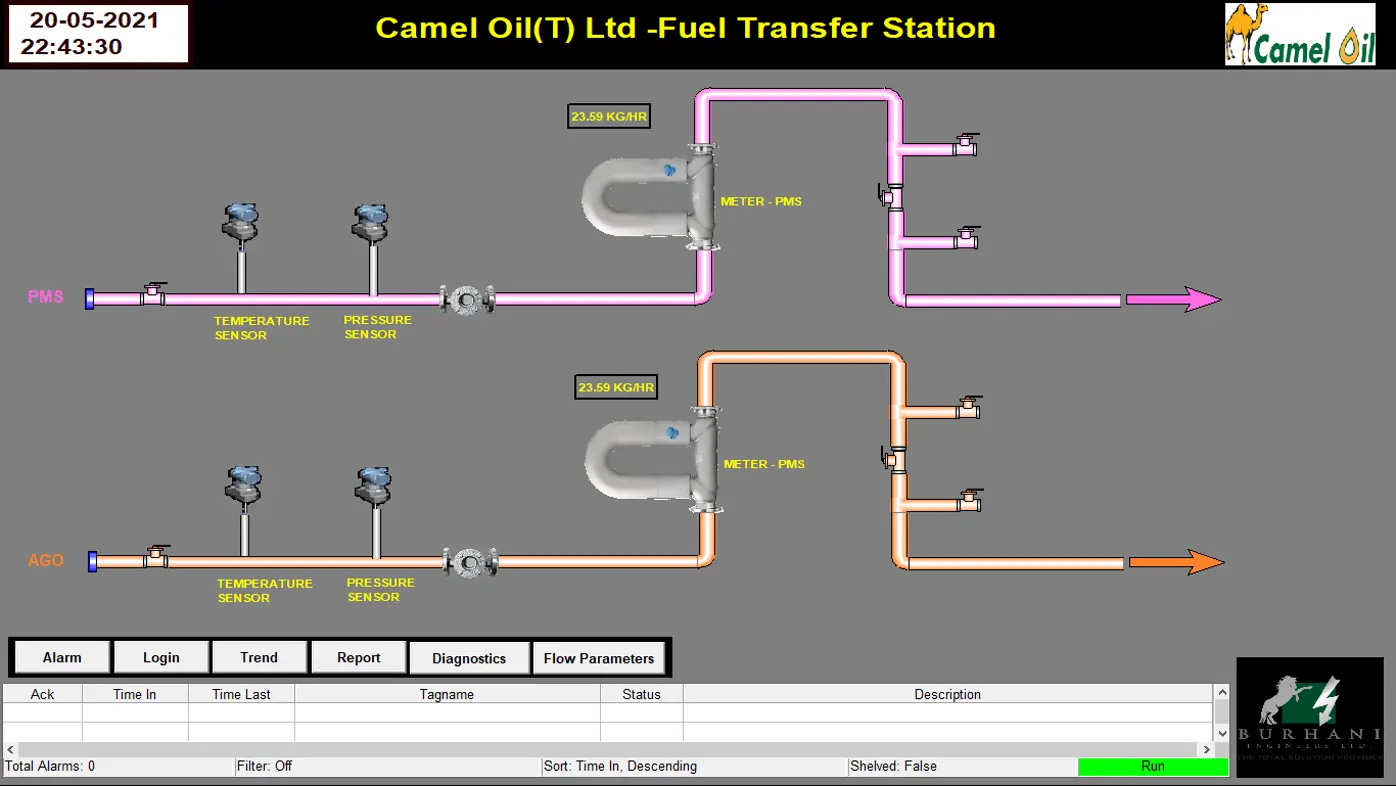
Multi-product terminals: receipt and dispatch metering for petrol, diesel and jet fuel with per-line temperature, pressure and flow compensation.
Quality: gas chromatograph integration for composition, density and molecular weight.
Track record
A natural gas metering skid for ADNOC and AD Ports in Abu Dhabi with Nirmal Industrial Controls. Fuel transfer station metering for Camel Oil and Oilcom in Tanzania. A meter prover system for Inelgas Metering Systems. Multi-party custody transfer at the GAIL Vizag dispatch terminal.
Skid overview, Abu DhabiS600+ flow computer panelMeter prover system, Inelgas
For project heads and buyers
The numbers on this screen are the invoice. The flow computer measures to international standards, the PLC moves the valves, and every proving run and total is recorded so both buyer and seller can trust it.
Why it matters
A 0.2 percent measurement error on a metering skid is worth more than the skid in a year. Regulators and counterparties expect fiscal-grade computers and a prover trail.
What you receive
Flow computer configuration to the specified standard
PLC skid logic and valve sequencing
SCADA meter run, totaliser and proving screens
Calibration and proving records at commissioning
Helpful to have
Product, flow range and pressure
Metering standard required (AGA, ISO, API)
Number of meter runs and prover arrangement
Typical duration
Three to five months including skid FAT; panels can be built in parallel with the skid.
How a project runs
Scope callWe go through your P&ID, I/O list or tender clause and agree what the control system has to do.
Technical offerA control philosophy, architecture drawing, bill of materials and price. No surprises later.
Engineering and buildDrawings for approval, PLC logic and SCADA screens built, panels assembled and FAT tested with you present.
CommissioningInstallation supervision, loop checks, start-up and operator training on your site.
SupportDocumentation handover and an annual maintenance contract with a named engineer.
What to send us for a quote
Attach these to your enquiry. The three marked essential are enough for us to start a budget.
Product, flow range, pressure and temperatureEssential
These size the meter runs and select the flow calculation we configure.
Metering standard and the contract or regulator clauseEssential
AGA, ISO or API calculations differ, and the clause sets the accuracy we must show.
Skid P&ID with number of meter runs and prover arrangementEssential
Run count and prover type decide I/O, valve sequencing and proving screens.
Meter, transmitter and prover datasheets
Pulse, HART or Modbus outputs decide flow computer inputs and wiring.
Gas composition or density data, or chromatograph details
Compressibility and density corrections need real composition, not assumed values.
Hazardous area classification, zone and gas group
It decides barriers, certified enclosures and cable entry.
Skid builder drawings and FAT schedule, if built elsewhere
Our panel work and your skid FAT have to line up, or the skid waits for us.
Who must see the data and the report formats each party needs
Multi-party custody transfer needs read access and reports agreed for each side.
Calibration and witnessing requirements
They fix who attends proving runs and which certificates we must file.
Do not have all of it? Send what you have; we work from a site visit for the rest.
What drives cost and schedule
Number of meter runs
Each run adds flow computer inputs, valves, I/O and proving steps.
Fiscal standard and accuracy required
A tighter requirement means duplicate transmitters, more proving and more documentation.
Prover automation
It adds I/O, sequencing logic and a witnessed proving run at commissioning.
Hazardous area certification
Certified enclosures and barriers cost more and take longer to approve.
Witnessed FAT and calibration traceability
Third-party witnesses fix our test dates, and certificate checks add days.
Skid built by someone else
Panel and skid have to meet at FAT, so a late skid pushes our schedule.
Typical timeline
Scope and metering standard2 to 3 weeksStandard, meter runs and prover arrangement agreed.
Drawings and approval2 to 4 weeksPanel, wiring and flow computer drawings approved.
Panel build and flow computer configuration5 to 7 weeksPanels built, flow computers configured, skid logic written.
Site installation and loop checks2 to 4 weeksPanel installation, cabling and loop tests on the skid.
Commissioning, proving and handover2 to 4 weeksStart-up, proving runs, calibration records and training.
Overall: Three to five months including skid FAT; panels can be built in parallel with the skid.
Budget
Every plant is different, so we price from the I/O list and scope rather than a rate card. Send the documents above and you will have a budget figure within a week, and a fixed price after the scope call.
PLC, SCADA and flow computer integration for a fiscal gas metering skid, executed with Nirmal Industrial Controls.
Emerson FloBoss S600+ flow computers calculate flow to AGA, ISO, GPA and GERG; the GE PLC handles skid logic and valves; Cimplicity shows meter runs and totals. Panels built in Mumbai to our specification.
An automated prover that verifies custody transfer meters read true.
The HMI routes flow through the prover, compares master meter and test meter volumes across repeat passes, sequences the valves and computes the meter factor.
A fiscal flow computer such as the S600+ computes custody transfer volumes to published standards with high-precision maths, secure configuration and audit trails. The PLC handles valves and skid logic; the flow computer owns the measurement.
How often does a custody meter need proving?
That depends on the contract and the regulator, but a prover lets the operator check the meter factor on demand and keep a record of every proving run.